


The Complete Guide to Buying Pre-Owned Designer Jewelry Online
Cartier, Van Cleef & Arpels, Tiffany & Co. — and how to buy them with confidence.
Buying pre-owned designer jewelry online has become one of the smartest ways to own a Cartier Love bracelet, a Van Cleef & Arpels Alhambra necklace — pieces that hold their value, tell a story, and often carry a waiting list when bought new. The secondary market for signed luxury jewelry has matured considerably, and buyers who know what to look for can access exceptional pieces at meaningfully better prices than retail. The same is true of second-hand estate jewelry, where craftsmanship and materials can far outweigh the absence of a brand name.


That said, buying used luxury jewelry online is different from walking into a boutique. You can’t hold the piece, inspect the clasp, or feel the weight of the gold. This guide is designed to close that gap — explaining what authentication looks like, what documentation to expect, how to evaluate condition from photos and descriptions, and what separates a trustworthy dealer from a risky one.
The pre-owned market isn’t a compromise — it’s often the only place to find discontinued designs, limited editions, and signed vintage pieces that simply aren’t available anywhere else.
Why Pre-Owned Signed Designer Jewelry Holds Its Value
Not all jewelry is created equal when it comes to resale value. The brands that consistently hold (and in some cases, appreciate) on the secondary market are the ones with the longest track records of craftsmanship, consistent design codes, and global name recognition.
The three houses that dominate the pre-owned luxury jewelry market worldwide are:
- Cartier — Known for its iconic collections including Love, Juste un Clou, Panthère, and Trinity. Cartier pieces are among the most liquid assets in the pre-owned jewelry market, with strong global demand and consistent resale values.
- Van Cleef & Arpels — The Alhambra collection in particular commands exceptional resale premiums. VCA’s signature mystery setting and distinctive motifs make their pieces immediately recognizable and highly sought after by collectors.
- Tiffany & Co. — Perennial icons like Return to Tiffany and HardWear retain strong pre-owned value. Tiffany’s hallmarking is clear and consistent, which makes authentication relatively straightforward.
Estate jewelry — signed or unsigned pieces from earlier eras — can also carry significant value when the craftsmanship, materials, or period are notable. But for most buyers coming to the second-hand luxury market for the first time, starting with a signed piece from a major house is the lower-risk entry point: provenance is clearer, authentication is more standardized, and resale markets are deeper.

What Does Pre-Owned Actually Save You?
For most signed designer jewelry, pre-owned pricing typically runs 20-40% below current retail, depending on condition, how complete the original documentation is, and market demand for that specific piece. A used Cartier Love bracelet in excellent condition with its original box will command significantly more than the same bracelet with heavy wear and no paperwork — but both will be more accessible than retail pricing.
Van Cleef & Arpels is the notable exception: the Alhambra collection routinely sells at or above retail on the secondary market due to persistent demand and limited boutique availability. For Tiffany, discounts tend to be more consistent and predictable, making it one of the more accessible entry points into second-hand luxury jewelry.
Pre-Owned Value at a Glance: Cartier, Van Cleef & Arpels, and Tiffany
Understanding relative resale dynamics helps set realistic expectations and identify where the best value opportunities exist in the pre-owned designer jewelry market.
| Brand | Top Collections | Resale Demand | Availability Pre-Owned | Typical Discount vs. Retail |
|---|---|---|---|---|
| Cartier | Love, Juste un Clou, Panthère, Trinity | Very High | Excellent — largest pre-owned market | 20–35% |
| Van Cleef & Arpels | Alhambra (Vintage & Magic), Perlee, Frivole | Extremely High | Good — often at or above retail pricing | 0–15% (Alhambra often at or above retail) |
| Tiffany & Co. | Return to Tiffany, HardWear, Elsa Peretti | High | Very Good — wide range of price points | 25–40% |
What “Certified Pre-Owned” Actually Means
The phrase “certified pre-owned” gets used loosely in the jewelry world, so it’s worth being specific about what legitimate certification involves.
At a minimum, a piece described as certified pre-owned should come with:
- Metal and stone verification: Confirming the purity of the metal (typically via hallmarks and testing) and the authenticity and grading of any center stones.
- Brand authentication: For signed pieces, confirmation that hallmarks, maker’s marks, and serial numbers (where applicable) are consistent with the claimed brand and production period.
- An appraisal or valuation: An independent or in-house estimate of current market value, typically used for insurance purposes.
The gold standard for gemstone documentation is a GIA (Gemological Institute of America) report. GIA grading reports for diamonds are verifiable by report number directly on GIA’s website, which means you can cross-check a stone’s documented characteristics against the physical piece. The AGS (American Gem Society) is another respected grading authority with strong ethical standards in the trade.
When buying pre-owned Cartier, Van Cleef & Arpels, or Tiffany online, always ask whether the piece retains its original paperwork. Original boxes, pouches, and certificates of authenticity don’t affect the jewelry itself, but they do support resale value and buyer confidence.

How to Authenticate Pre-Owned Luxury Jewelry Online
Authentication is harder to perform remotely, which makes the reputation and process of the dealer you’re buying from even more important. Here’s what a rigorous authentication process looks like — and what you should be able to verify as a buyer:
- Hallmark and maker’s mark inspection: Every major jewelry house uses consistent hallmarking. Cartier pieces are stamped with the maker’s mark, metal purity, and often a serial number. Van Cleef & Arpels uses similar conventions. Tiffany stamps typically include the metal, T&Co., and country of manufacture. A reputable dealer will photograph hallmarks clearly and describe them in the listing.
- Metal testing and weight verification: Beyond visual hallmarks, metals can be tested for purity using acid testing or XRF (X-ray fluorescence) analysis. Weight is also a useful indicator — an 18k gold Cartier Love bracelet has a consistent documented weight range; a piece that’s significantly lighter warrants scrutiny.
- Stone verification: For pieces with significant diamonds or colored stones, look for GIA or other third-party lab documentation. If a stone has been previously graded, the report number is often laser-inscribed on the girdle of the diamond and can be physically verified under magnification.
- Serial number cross-referencing: Some brands maintain internal records that authorized service centers can access. For high-value pieces, a brand service check — where the piece is sent to a brand boutique or authorized service center for inspection — is the most definitive form of authentication available.
- AI-assisted analysis: Increasingly, dealers are using AI-driven image analysis tools to cross-reference piece characteristics against authenticated references. It’s a useful supplemental layer, particularly for identifying inconsistencies in construction or finish that might signal a counterfeit.
How The 1916 Company Authenticates Pre-Owned Jewelry
The authentication of our pre-owned jewelry is a meticulous, multi-layered process built on decades of expertise and resources. With over 50 years of experience, our specialists bring a deep understanding of each maison’s craftsmanship, design evolution, and manufacturing nuances. This expertise is critical when examining hallmarks, construction techniques, and overall integrity of a piece.
A key component of the process is the analysis of serial numbers. Each piece is carefully reviewed to ensure the serial number format, engraving style, and placement align with the brand’s standards. These numbers are then cross-referenced against known production timelines to confirm they correspond accurately to the correct year and collection.
In addition, internal photo archives play a vital role. We use our photo references to compare design details, proportions, and finishing techniques. This ensures consistency with original specifications and helps identify any discrepancies. Together, these layers of expertise and documentation provide a highly reliable authentication process, giving confidence in the provenance and authenticity of every pre-owned piece.
Have questions about a specific piece? Our team is here to help.
What to Look for When Buying Pre-Owned Luxury Jewelry Online
When evaluating any pre-owned or second-hand designer jewelry listing online — whether from a specialized dealer or a broader marketplace — the quality of what you can see, and what the seller is willing to share, tells you a lot about what you’re actually getting.
Before committing to a purchase, it’s worth asking:
- Are hallmarks clearly photographed? Hallmark close-ups are a basic transparency signal. If they’re absent, ask before buying. A reputable dealer has nothing to hide here.
- What documentation comes with the piece? Original box, pouch, papers, or warranty card all support resale value and buyer confidence. If none of the original paperwork is present, has the piece been re-authenticated by the dealer? Both situations are legitimate — the key is transparency about which applies.
- Is there a written authenticity guarantee? A reputable dealer stands behind their authentication. Ask explicitly: what happens if you receive the piece and have concerns about its authenticity?
- What is the return policy? For high-value used jewelry purchases, a clear return window is non-negotiable. Know the terms before you buy.
You can also ask any dealer directly for additional photos — of the hallmark, a specific area of wear, or the clasp mechanism. A seller confident in their piece will accommodate reasonable requests.

Buying Pre-Owned Cartier Jewelry: What to Know
Cartier is the most actively traded brand in the pre-owned luxury jewelry market, which is both an advantage and a caution. High demand means strong liquidity and a well-documented secondary market — but it also means Cartier is the most counterfeited luxury jewelry brand in circulation. Whether you’re buying second-hand from a dealer or a private seller, authentication rigor matters more here than almost anywhere else in the market.

The collections most commonly bought pre-owned are:
- Love: The screw-motif bangle is Cartier’s most iconic piece. Pre-owned Love bracelets in yellow, white, and rose gold are consistently available and highly liquid. Look for consistent screw detailing, correct weight (varies by size and metal), and clear hallmarking on the inner band.
- Juste un Clou: The nail bangle, reissued from a 1970s design. Construction quality and weight are reliable authenticators.
- Panthère: More complex pieces with pavé stones and enamel. Condition of the stones and finish matters significantly to value.
- Trinity: Three-band rings in tricolor gold. Look for smooth rotation of the bands and consistent metal weight.
Buying Pre-Owned Van Cleef & Arpels: What to Know
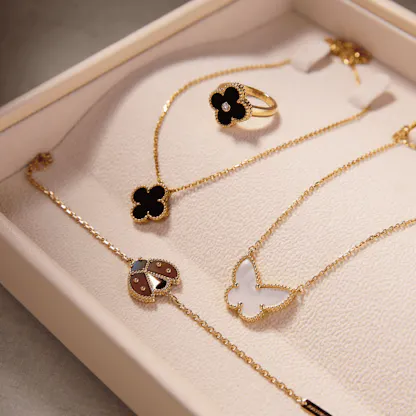
Van Cleef & Arpels occupies a unique position in the second-hand luxury jewelry market: the Alhambra collection routinely sells at or above retail on the secondary market due to persistent demand and limited boutique availability. For collectors and buyers, that makes pre-owned VCA not just accessible, but often the only realistic path to ownership for discontinued motifs and colorways.

Key collections in the pre-owned VCA market:
- Alhambra (Vintage and Magic): The four-leaf clover motif is one of the most recognized in fine jewelry. Available in onyx, malachite, carnelian, mother-of-pearl, and more. Authenticity markers include consistent motif proportions, quality of stone inlay, and correct hallmarking. The Vintage Alhambra necklace (20 motifs) and Magic Alhambra (multi-motif, multi-stone) are particularly sought after.
- Perlee: Gold ball-edged pieces with a tactile, distinctive finish. Condition of the perlee beads is a key quality indicator.
- Sweet Alhambra: Smaller-scale version of the classic motif, often in necklaces, earrings, and bracelets. A popular entry point into the collection.
- Frivole: Flower motif collection in gold with diamond centers. Inspect stone integrity and petal finish closely in photos.

Buying Pre-Owned Tiffany & Co.: What to Know
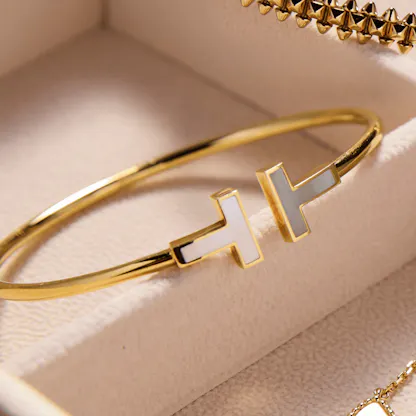
Tiffany’s straightforward hallmarking and consistent quality standards make it one of the more buyer-friendly brands in the second-hand market. Most pieces are clearly stamped, well-documented in secondary market databases, and relatively easy to authenticate against known references — making pre-owned Tiffany a strong entry point for first-time buyers of used designer jewelry.

Popular pre-owned Tiffany categories:
- Return to Tiffany: The heart tag and toggle designs from this collection are widely available pre-owned and immediately recognizable. Condition of the tag engraving and clasp function are key.
- HardWear: Bold gold link pieces that launched in 2017. Relatively newer in the pre-owned market, but with strong demand from younger collectors.
- Elsa Peretti: Iconic organic forms — Bean pendants, Bone cuffs, Open Heart — in sterling and gold. A beloved and highly collectible sub-line with a loyal following on the secondary market.
How to Care for Your Pre-Owned Designer Jewelry
Pre-owned luxury pieces have a life before they reach you, which means maintenance is worth thinking about from day one.
- Have it professionally inspected on arrival: Before you start wearing a new-to-you piece regularly, take it to a trusted jeweler for a quick check — prong integrity, clasp function, any loose stones. This is especially important for pieces like pavé rings or Panthère pieces with many small stones.
- Clean gently and consistently: A soft brush with mild soap and warm water handles most routine cleaning. Avoid ultrasonic cleaners for older pieces or anything with enamel, soft stones, or intricate settings.
- Store pieces separately: Diamonds and hard gemstones will scratch softer metals and stones. Individual pouches or compartments prevent surface damage.
- Limit chemical exposure: Chlorine, perfume, and cleaning products can affect gold alloys and stone treatments over time. Put your jewelry on last; take it off first.
- Service periodically: Re-tipping worn prongs, re-plating white gold, and replacing clasps are routine — and far less expensive than losing a stone. Most major brands offer in-house servicing for their pieces.
Why Pre-Owned Luxury Jewelry Is Also the Sustainable Choice
The environmental footprint of mining gold and gemstones is substantial. When you buy a pre-owned Cartier or Van Cleef & Arpels piece, those extraction costs have already been borne. You’re extending the life of something beautifully made rather than creating demand for new production.
The secondary market for luxury jewelry has grown significantly — driven partly by sustainability awareness, partly by accessibility, and partly by a wider recognition that second-hand doesn’t mean lower quality. A Van Cleef Alhambra necklace made in the 1990s is crafted with the same gold and the same standards as one made today. In some cases, discontinued colorways and motifs mean the pre-owned market is the only place to find them.
Choosing certified pre-owned designer jewelry is a way to participate in sustainable luxury consumption without compromising on quality, provenance, or the experience of owning something genuinely exceptional.
Shop Pre-Owned Designer Jewelry at The 1916 Company
The 1916 Company specializes in certified pre-owned luxury jewelry from the world’s most recognized houses. Every piece in our inventory is authenticated by our team before listing — with hallmark photography, condition documentation, and a transparent return policy.
Whether you’re looking for a pre-owned Cartier Love bracelet, a Van Cleef Alhambra necklace, a Tiffany diamond ring, or a distinctive estate piece, our collection is curated by specialists with over five decades in the market.
Frequently Asked Questions
Is it safe to buy pre-owned luxury jewelry online?
Yes — when you buy from a reputable, established dealer. The key indicators of a trustworthy seller are a clearly documented authentication process, transparent condition descriptions, a written authenticity guarantee, and a defined return policy. Buying second-hand luxury jewelry online carries more risk when those elements are absent or vague, as they sometimes are on general resale platforms. Specialized dealers with long track records in the market offer a meaningfully different level of accountability than peer-to-peer marketplaces.
How much cheaper is pre-owned Cartier compared to buying new?
Pre-owned Cartier jewelry typically sells for 20 to 35 percent below current retail pricing, depending on condition, the specific piece, and whether original packaging and documentation are present. A Love bracelet in excellent condition with its box will command more than the same bracelet with heavy wear and no paperwork — but both will be more accessible than buying new from a boutique.
Does Van Cleef & Arpels jewelry hold its value?
Exceptionally well — and in some cases, it appreciates. The Alhambra collection in particular routinely sells at or above retail on the secondary market, driven by persistent demand and limited boutique availability. For buyers, this means that pre-owned VCA isn’t just a value play; it’s often the only realistic way to acquire certain pieces, especially discontinued motifs and colorways.
Does original packaging matter when buying pre-owned?
It matters for resale value and buyer confidence, but it doesn’t affect the jewelry itself. A Cartier Love bracelet without its original box is still a Cartier Love bracelet. That said, complete sets — with box, pouch, papers, and warranty card — do command a premium on the secondary market and provide additional peace of mind at the point of purchase. If original packaging is absent, confirm that the dealer has independently authenticated the piece.
What does “certified pre-owned” mean for jewelry?
The term isn’t regulated, which is part of why it’s worth being specific. Legitimate certification should involve at minimum: verification of metal purity (via hallmarks and/or testing), brand authentication (confirming hallmarks, maker’s marks, and serial numbers are consistent with the claimed house and production period), and an appraisal or valuation for insurance purposes. For pieces with significant stones, a GIA report adds an important layer of independent documentation.
How do I know if a pre-owned Cartier piece is authentic?
Cartier authentication relies on several markers working together: consistent hallmarking (maker’s mark, metal purity, often a serial number on the inner band), correct weight for the specific model and metal, and construction quality consistent with the claimed production era. A reputable dealer will have verified all of these before listing. For buyers, requesting clear hallmark photos and asking about the dealer’s authentication process are reasonable first steps before any high-value purchase.
Is used or estate jewelry the same as pre-owned?
The terms are often used interchangeably, with some nuance. “Pre-owned” and “second-hand” typically refer to any jewelry with a previous owner, regardless of age. “Estate jewelry” more specifically refers to pieces from a deceased person’s estate — often implying older or antique pieces, though the term is used broadly. “Vintage” generally describes pieces that are 20 to 100 years old. For signed designer pieces from major houses like Cartier or Van Cleef & Arpels, the distinctions matter less than the authentication process behind the specific piece.